What a burst bubble leaves behind
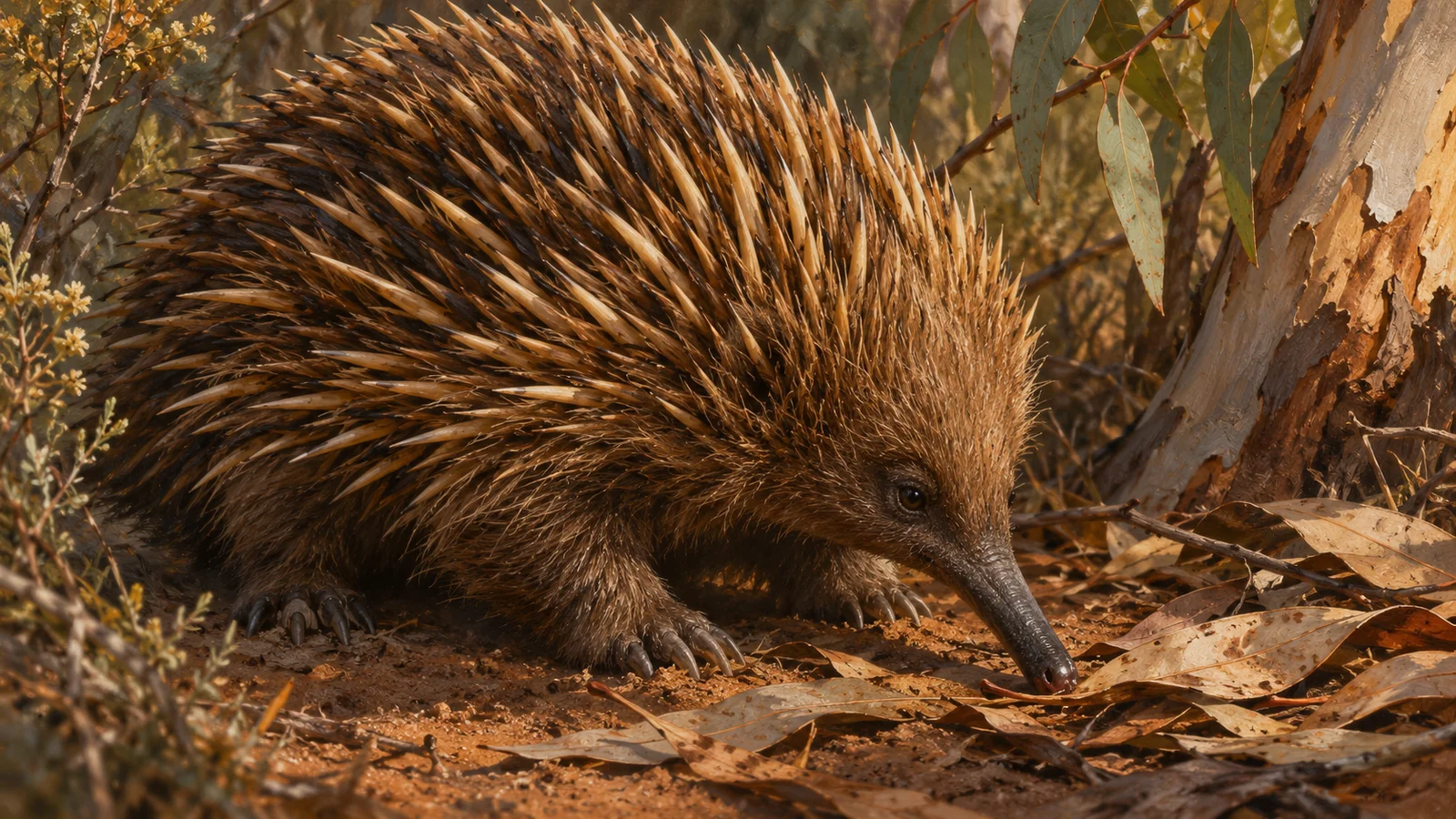
In warm conditions, the short-beaked echidna (Tachyglossus aculeatus) can blow a bubble of mucus from its nostrils. When the bubble bursts, it leaves a thin layer of moisture on the tip of the snout. Barker and colleagues saw this behavior in a laboratory study published in 2016. As the moisture evaporates, it draws heat from the surface. Beneath the tip lies a blood sinus, a space filled with blood, which makes the cooled surface relevant to the animal’s circulation.
A camera looks at the whole animal
In a 2023 field study, Christine Cooper and Philip Withers used infrared video to estimate the surface temperatures of wild echidnas at two sites in Western Australia. The researchers compared different parts of the body and measured conditions near the animal while filming. The tip of the snout was, on average, the coolest of the areas examined. Its temperature also tracked a measure of the surrounding thermal conditions in a way the authors interpreted as evidence of evaporative cooling. The camera measured the surface and did not directly measure the temperature of the blood flowing beneath it.
Where the animal can let heat go
Cooper and Withers also identified less insulated areas on the underside and inside the legs. A change in posture can expose those surfaces or bring them against cool ground, giving heat another route out. Along part of the back, the spines can lie flat and cover the skin or stand up and expose it. Those details explain why researchers look at several parts of the body alongside the nose when studying how an echidna handles heat.