Put both arms to the test
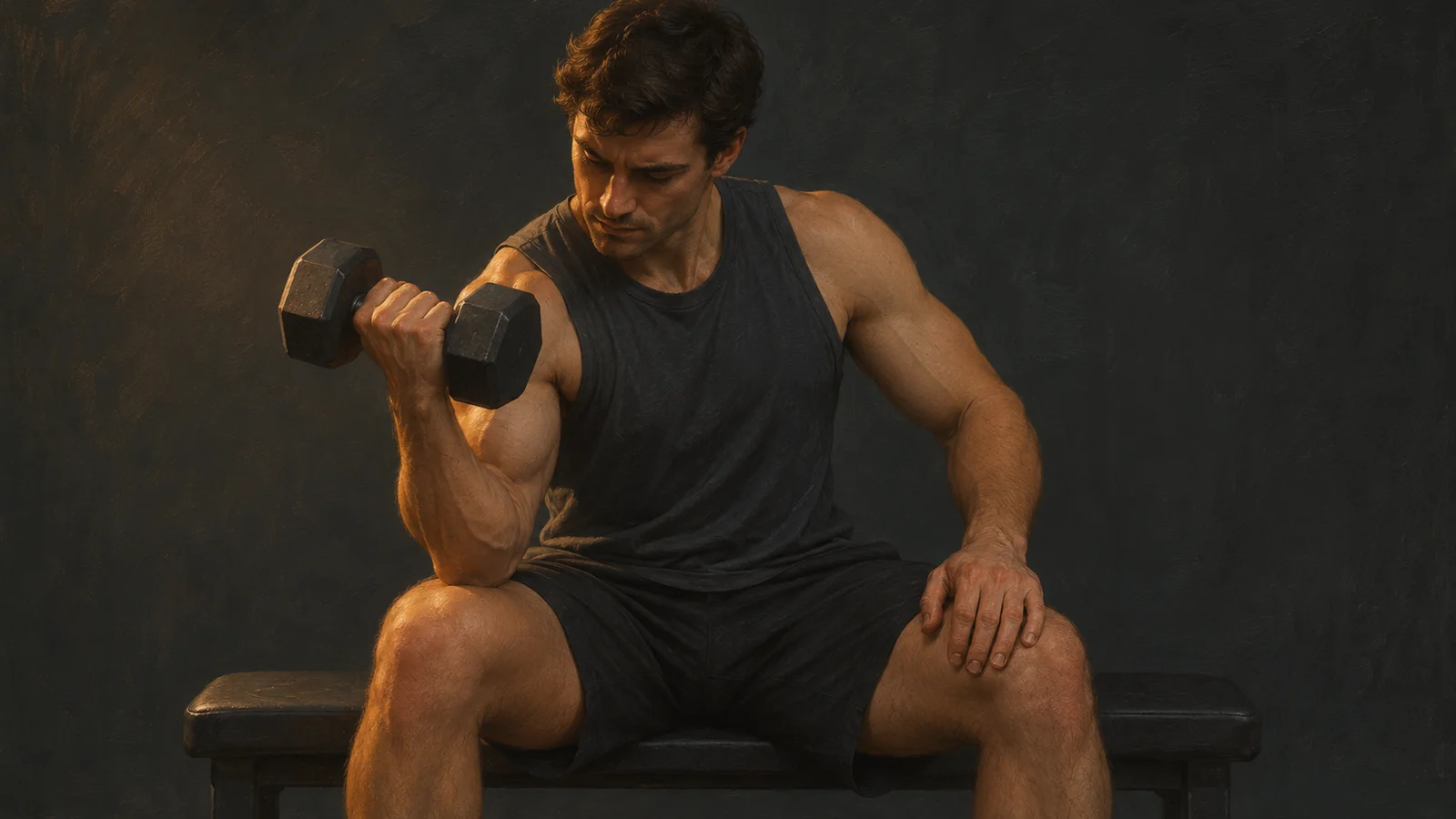
Imagine a dumbbell curl done with one arm for several weeks. At the end, the researchers test both arms separately. If the arm that skipped the training improves compared with a group that did no exercise, they call that a transfer of strength, or cross-education. The American College of Sports Medicine’s 2026 overview for healthy adults found evidence of such a transfer. For this comparison, the authors summarized strength results.
Two measurements, two stories
In 2024, Song and colleagues randomly assigned 160 participants to train the dominant arm, the other arm, both arms, or neither. The three training groups did six weeks of heavy elbow-flexion exercise. The researchers tested the maximum weight participants could lift in one repetition and measured muscle thickness separately. The untrained arm became stronger in the groups training just one side. A detectable increase in muscle thickness appeared only in arms that trained directly. When both arms did the same heavy training, the study found no detectable extra strength gain from the transfer.
Does it matter which arm trains?
Wong and colleagues looked at whether transfer tends to be stronger when the dominant side does the training. Only three studies met their review criteria, and they found little support for a general advantage in that direction. In an earlier trial, Munn and colleagues found a small gain in the untrained arm with one of their training approaches. Another approach in the same experiment produced no detectable gain. The result to look for is the change on the untrained side in the specific test. Its size can vary with the study and the protocol.