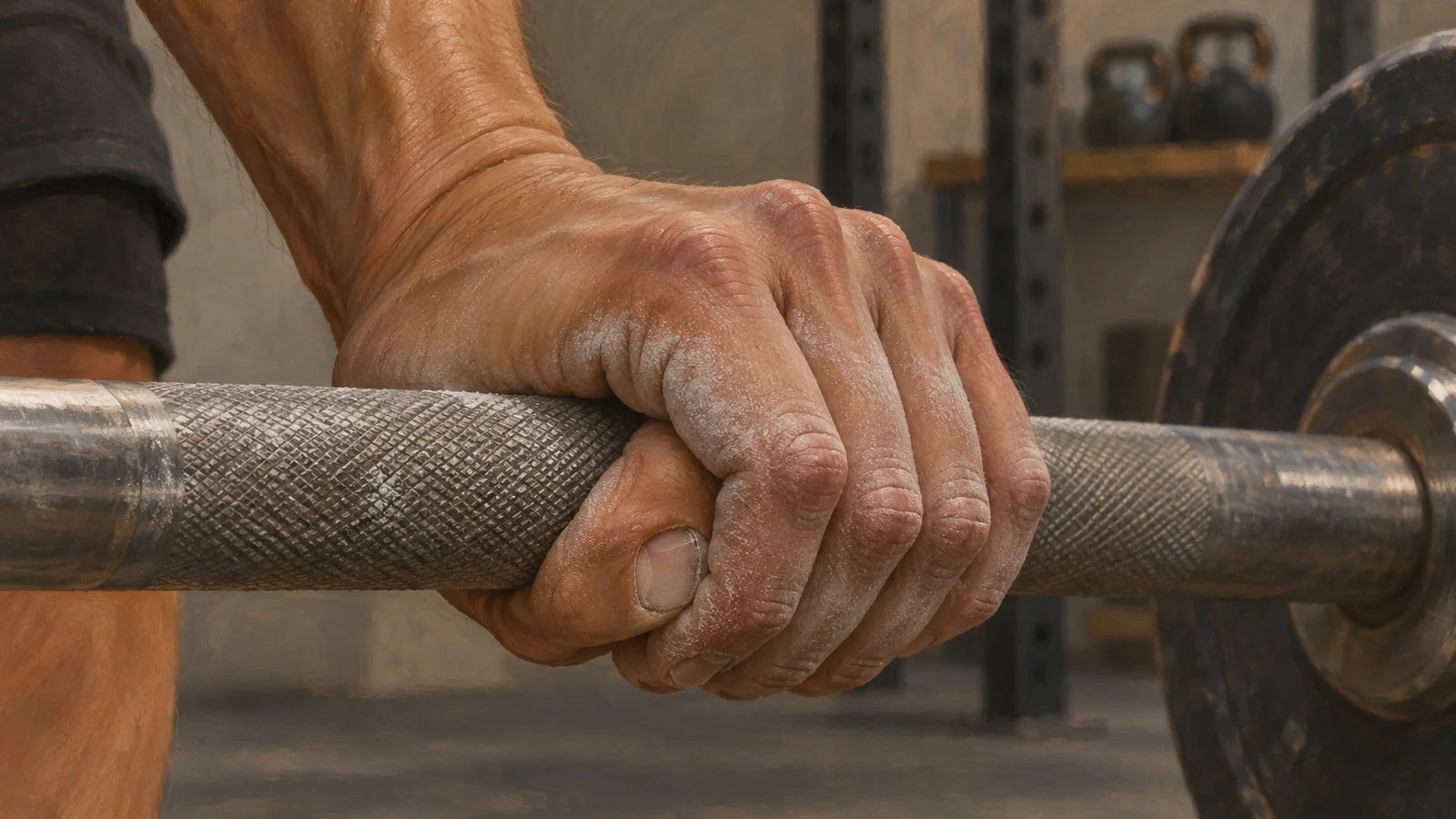
The thumb goes under the fingers
Freeze a close-up of a weightlifter just before the bar leaves the platform. In a hook grip, the thumb wraps around the bar and the fingers of the same hand close over it. In the conventional closed grip used for comparison in the studies, the thumb closes over the fingers. Rule 2.4.1 of the International Weightlifting Federation’s 2026 rulebook permits the hook grip. Rule 2.3.2 also allows a lifter to unhook the thumbs before the jerk. The grip at the start and the grip before the second part of the lift can look different.
What researchers measured
In a 2019 study, Dustin Oranchuk and colleagues compared the two grips in the power clean. The 11 well-trained men already had experience with the hook grip. Each man lifted a heavier maximum single with the hook grip during the tests. The paper also reported higher peak bar speed at submaximal loads.
Watch the transition to the shoulders
In a 2022 paper, Oranchuk’s team reported that the catch phase and the lift as a whole tended to be shorter at some loads with the hook grip. Their analysis detected no difference in the normalised force over time during the pull or the catch. On your next replay, watch when the elbows come through and the bar settles at the shoulders. Both papers came from the same research team and describe short-term comparisons in a small group of trained men. Whether the same effect occurs for beginners, in a deadlift or after months of training remains a separate question.