Look at the rest of the plate
When you lift weights, a conversation about food can easily end with grams of protein. Yet the weekly shop contains other decisions: what accompanies the main dish, which fruit is available, or whether pulses ever make an appearance. Fibre belongs in that picture.
WHO places whole grains, vegetables, fruit and pulses among the main recommended sources of carbohydrate. This guidance helps us consider the whole eating pattern, including when the gym is part of the week.
What we mean by fibre
EFSA's scientific opinion on carbohydrates and fibre, published in 2010, includes non-digestible carbohydrates and lignin in its definition of dietary fibre. Unlike carbohydrates digested and absorbed in the small intestine, this fraction passes on to the large intestine.
That distinction explains why talking only about carbohydrates leaves out useful information. A food does not need extraordinary powers for its composition to deserve attention. Looking beyond a single nutrient makes it easier to understand what is on the plate.
Put 25 grams in context
EFSA considers 25 grams a day an adequate intake for normal bowel function in adults. WHO's January 2026 fact sheet recommends at least 25 grams of naturally occurring fibre from food daily for people older than ten. These references have a defined purpose; they are not a formula calculated for building muscle.
Those statements do not make 25 grams an upper limit or an individual prescription either. They cannot support a promise of greater strength or hypertrophy simply from reaching a number.
A shopping pattern you can repeat
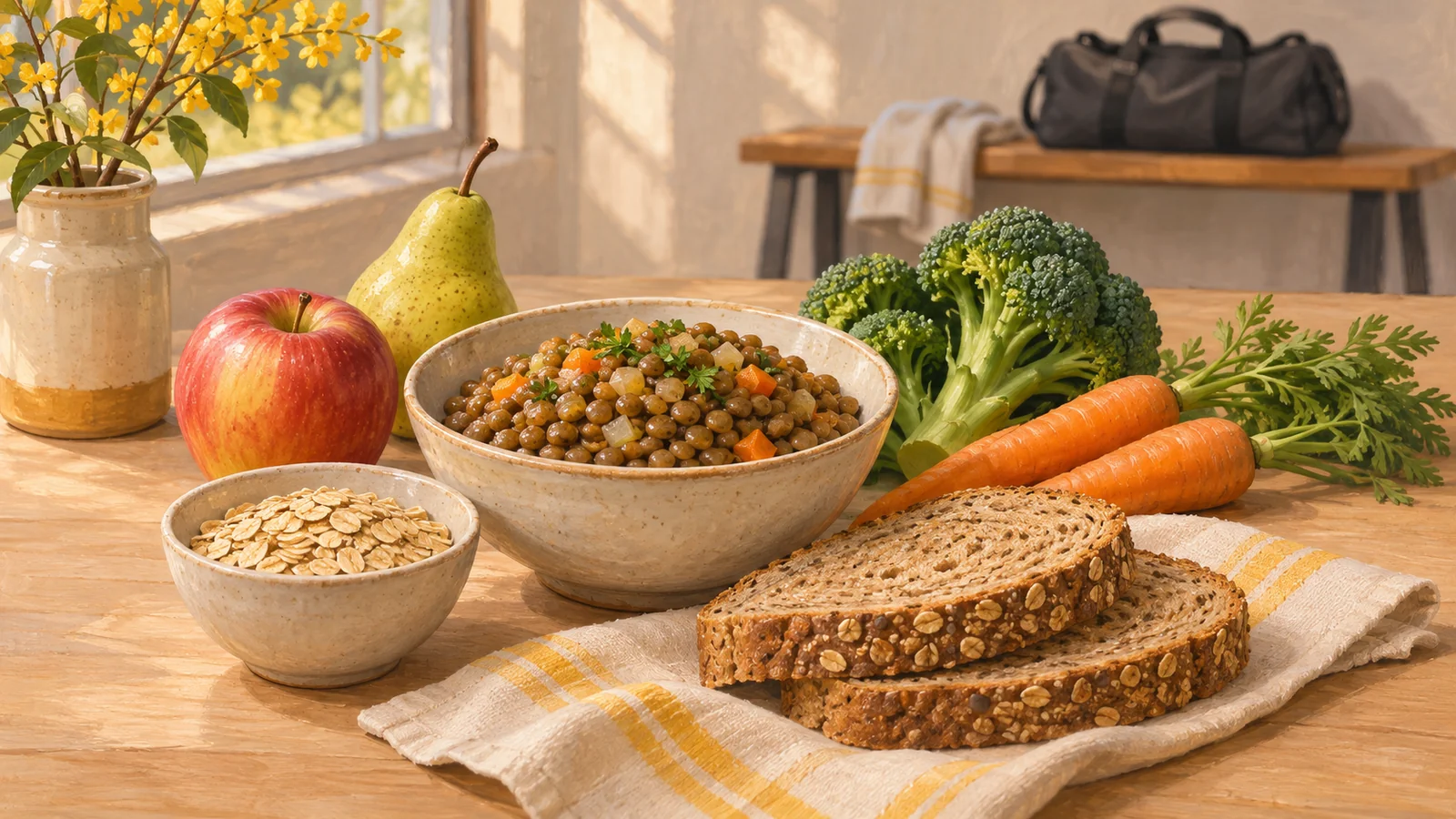
Food ideas include lentils or chickpeas, oats or wholemeal bread, a variety of vegetables and whole fruit. They can appear across familiar meals according to preferences and circumstances. The useful question is whether that variety actually shows up during the week, rather than remaining on a list of ideal foods.
WHO notes that a balanced diet's composition varies with age, activity, culture and available foods. This article concerns everyday eating for healthy adults. It does not prescribe a menu, treat digestive conditions or specify what to eat immediately before training. The aim is a fuller view of the plate.