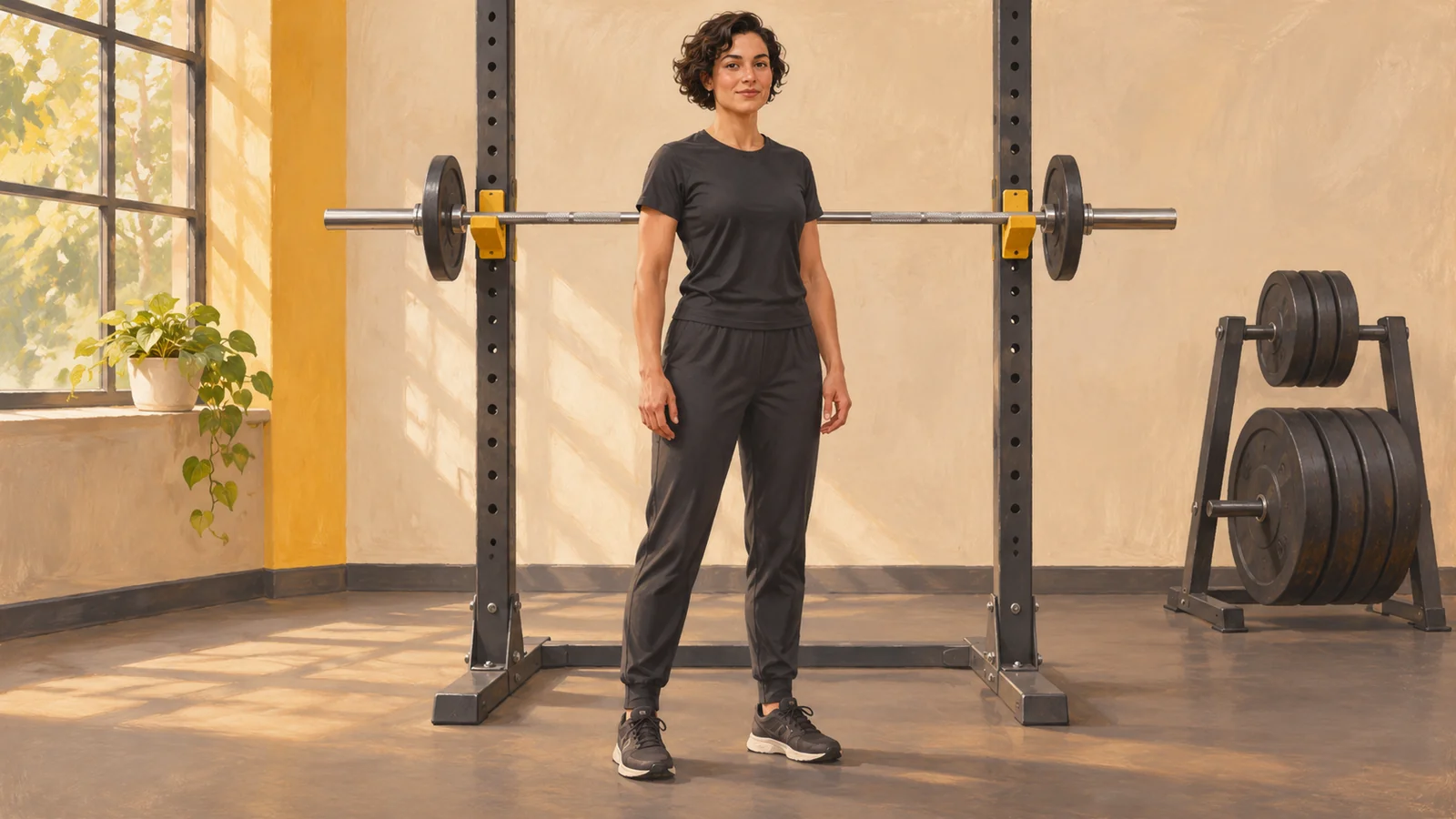
Prepare for the movement ahead
Before the first working set, there is a simple task: check how your body is moving today. The NSCA distinguishes between a general warm-up and a specific component involving movements related to the activity that follows. The purpose is to adjust gradually to the session's demands without excessive fatigue.
In a weights session, this gives each step a purpose. General movement helps with the transition from rest; ramp-up sets offer a chance to become familiar with the exercise, its range of motion and the equipment you will use.
Approach the load with purpose
As an illustrative example, before a press you could rehearse the movement with a light load and then approach your working load in stages. As those stages become more demanding, reducing the repetitions can help keep the warm-up manageable. The number of sets depends on the exercise, intended load and experience; there is no universal ladder everyone needs to copy.
Rest matters too. Being able to position the bar with control and repeat a comfortable movement provides more useful feedback than rushing through a warm-up ritual.
What the research says
Ribeiro and colleagues' 2021 review brought together eleven studies on warm-ups and performance in resistance exercises. Results were mixed: combining general and specific warm-ups did not consistently produce the same benefit. That calls for caution when presenting one protocol as best for every person or session.
Preparatory sets can provide rehearsal, but making them very long or very demanding changes their role. The practical question is whether they help you begin the planned work with control or are already using up a substantial part of that effort.
Assess it without promises
A warm-up cannot guarantee freedom from injury. McCrary and colleagues' 2015 review of upper-body warm-ups noted that the included studies did not investigate injury-prevention outcomes. That limitation does not show that warming up is useless: performance and prevention are different questions.
To refine your preparation, it can help to record the exercise, the ramp-up sets and how the first working set felt. Consistency makes it easier to learn from the session without turning every warm-up into another competition.