Look at the two lines
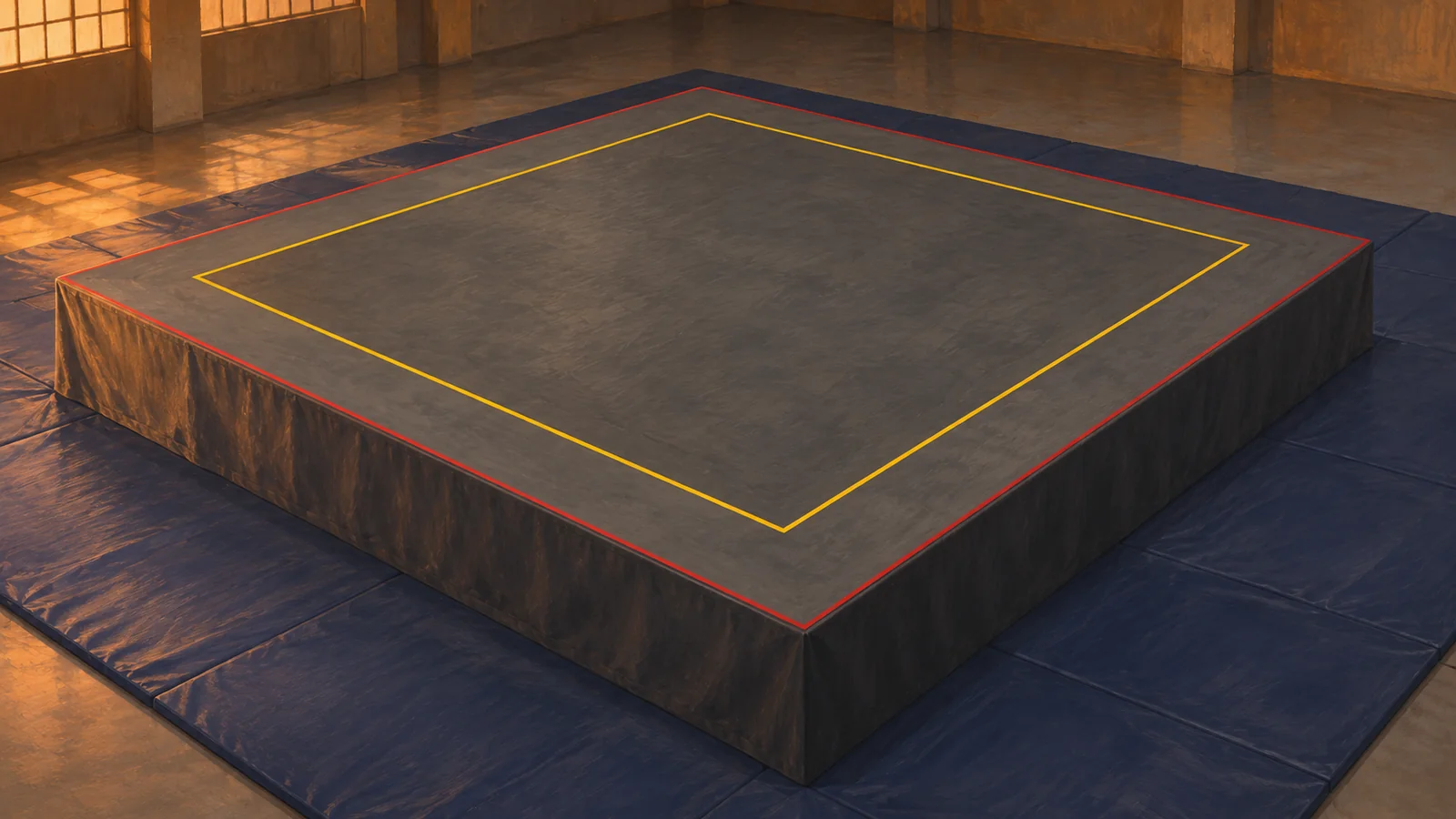
A fighter backs away from a kick and crosses the yellow line with a heel. The exchange can still continue. In sanda, the combat discipline of wushu, bouts take place on a raised platform called a leitai. The International Wushu Federation’s 2024 rules specify a square eight metres on each side and 80 centimetres high. The red line marks the perimeter. The yellow warning line runs 90 centimetres inside it, and protective mats surround the platform at floor level.
When the referee stops the action
Article 21.1.1 counts an exit when any part of the body bears weight on, or makes firm contact with, the mats outside the platform or the floor. So a foot that lands firmly on an outer mat can count even if the fighter stays upright. When one fighter goes out, the other gets two points, and article 23.1 provides for a stoppage. If the officials rule that both fighters went out in the exchange, article 21.3.2 awards neither fighter points for that exit.
What a second exit can decide
Picture a fighter returning to the platform after one exit. If that same fighter goes out again in the same round, article 24.2.3 gives the round to the opponent. A first exit in each of two different rounds does not trigger that provision. The outcome of the bout is a separate matter. Article 24.3.1 gives it to the first fighter to win two rounds.
Check which rules the event uses
The IWUF announced that the 2024 edition would apply from 1 January 2025. The regulations for the 11th Sanda World Cup in Macao in 2026 refer to it, with room for event-specific provisions. When you watch another tournament, check its rulebook first. Under this version, a wide replay helps you see where the athlete lands and whether both fighters go out. The round tally then tells you what that call can decide.